From Crisis to Cultivation: How Communities in Malaysia Are Growing Their Own Food
In Malaysia, many poor urban families, elderly homes, special-needs students, and persons with disabilities (PWDs) faced a growing but often overlooked crisis of food insecurity. Before 2020, many households relied heavily on market vegetables exposed to pesticides, chemical residues, and artificial treatments. Fresh, safe food was not always affordable or accessible. When COVID-19 disrupted incomes and supply chains, the situation worsened dramatically. Access to nutritious vegetables declined, employment pathways narrowed, and vulnerable communities, especially persons with disabilities were left increasingly dependent on food aid.
At the same time, nature was struggling. Over fertilization degraded soil health. Chemical runoff polluted drains and waterways. Stagnant water created breeding grounds for disease. The system was failing both people and the planet. What was needed was not temporary relief but a natural positive, disability inclusive, and affordable solution.
A Regenerative Approach to Local Food Security
Recognizing the urgency of the crisis, PWD Smart FarmAbility Sdn. Bhd., a disability-led regenerative social enterprise, launched an ambitious initiative in 2020: PWD Smart FarmAbility – Soil-U-tion™ Regenerative Aquaponics & Eco-HOPE Box Food System.
Their mission was simple yet powerful: “No household too poor, no disability too severe, to grow safe food.”
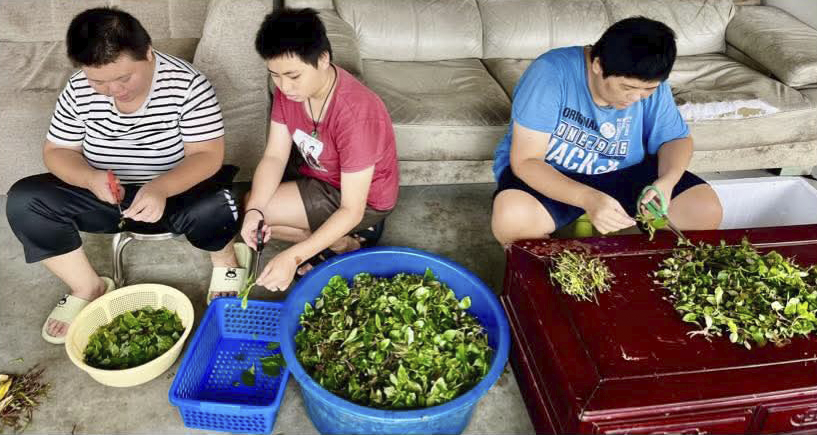
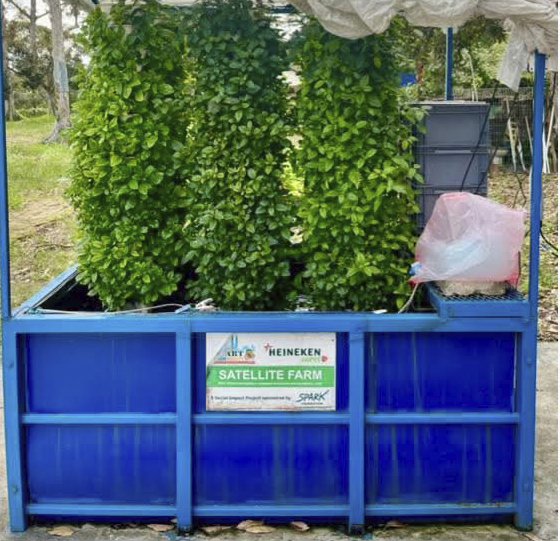
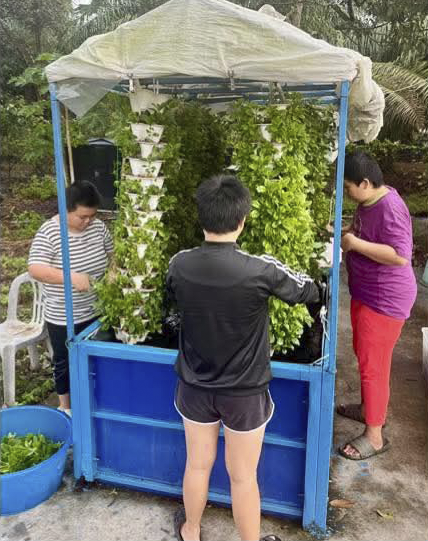
Rather than relying on chemical inputs or expensive infrastructure, the initiative built a closed-loop regenerative ecosystem rooted in soil health, microbiology, and community empowerment. The first innovation was the Eco-HOPE Box Terrarium™, a soil-based mini greenhouse capable of producing chemical free vegetables every 10 to 14 days. The system requires no electricity, pumps, fertilizers, or recurring costs. Powered only by sunlight and natural soil microbes, it makes safe food production accessible even to children, seniors, and persons with disabilities. The second innovation, the Soil-U-tion™ Aquaponics Satellite Farm, produces tilapia every four to five months and leafy greens every 10 to 20 days. Designed as a zero-waste, zero-chemical ecosystem, the system strengthens biodiversity while naturally cycling nutrients and sequestering carbon. But the initiative goes beyond technology. Through a disability-led social franchising model, PWD graduates become trainers, franchise owners, youth mentors, and community climate stewards. Systems have been implemented in special education schools, B40 housing flats, elderly homes, women-led households, faith based centers, and rural villages. Turning food recipients into food producers.
Evidence of Impact and Community Transformation
The results have been transformative.
To date, 8,010 Eco-HOPE Box Terrariums are active across Malaysia. More than 346,000 chemical-free vegetables have been harvested. Sixty sites operate Soil-U-tion™ systems, producing 22 tonnes of tilapia, all without introducing fertilizers or chemicals into community ecosystems. Through soil regeneration efforts, over 250 tonnes of CO₂e have been sequestered. Chemical runoff has been eliminated at project sites. Pollinator activity has returned. Local biodiversity has been restored at the household level.
Beyond environmental impact, the social results are equally powerful. Approximately 12,500 individuals have benefited directly, including more than 3,000 special education students trained in soil science, aquaponics, STEM education, and regenerative agriculture. PWD leadership has flourished, creating employment, entrepreneurship, and long-term self-reliance. Families now have dependable access to fresh vegetables and protein. Youth are engaged in climate restoration and biodiversity action. Dignity has been restored alongside food security.
Monitoring and transparency are supported through structured tracking and reporting systems available via the organization’s platform.
Creating Long-Term Food Security Through Regenerative Innovation
The initiative’s sustainability lies in its simplicity. It runs entirely on photosynthesis, soil biology, and natural nutrient cycles, without artificial fertilizers, pesticides, or insecticides. The Eco-HOPE Box costs approximately RM500 (USD $110), making it affordable and accessible for low-income households. Because the system is low-tech and easy to operate, it can be replicated in homes, schools, urban flats, and rural villages.
Aligned with the Food Category’s goals of promoting fresh, nutritious, and affordable access to food, this initiative demonstrates that regenerative agriculture can be inclusive, climate-positive, and community-led. By combining food production, disability empowerment, climate restoration, and zero-chemical systems, PWD Smart FarmAbility offers more than a farming solution; it offers a model for resilient communities.
In a world where food systems often marginalize the vulnerable and harm the environment, this initiative proves that regeneration is possible. Safe food can be grown locally. People with disabilities can lead innovation. Communities can restore their ecosystems.
And no household has to be too poor or too disabled to grow safe food.